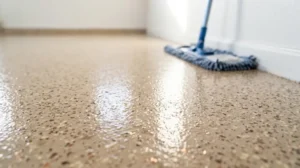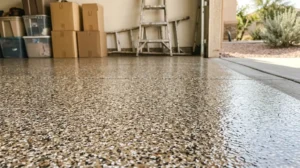
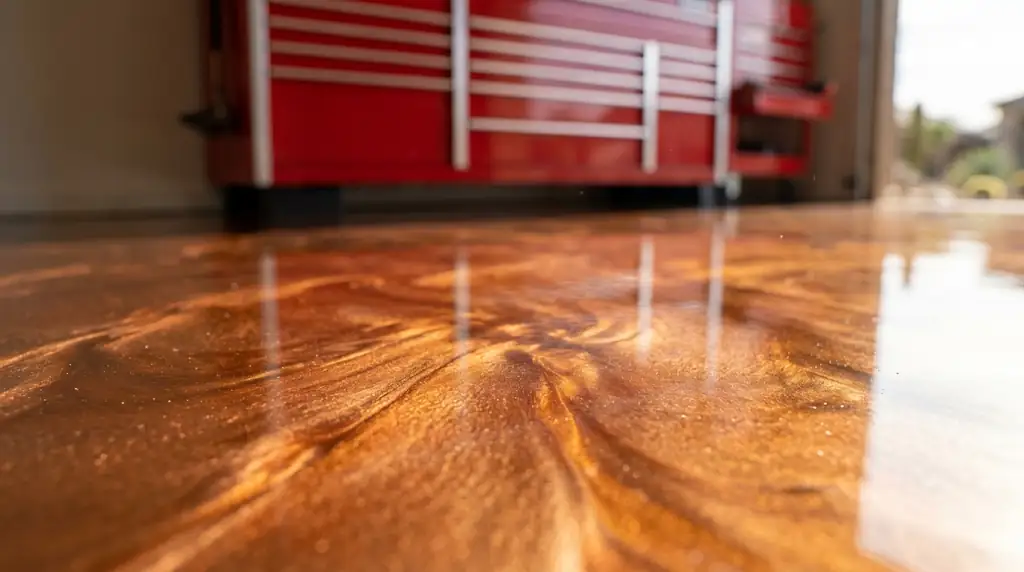
Yes, you can apply epoxy over cracked concrete floors in the Phoenix West Valley, but only if the cracks are structurally repaired first. Installers must route the fissures and fill them with industrial polyurea or epoxy injection resins to prevent the damage from transferring through the new floor coating.
Concrete is highly durable, but cracking is an inevitable reality in Maricopa County. The expansive clay soils beneath local homes expand during the wet monsoon season and contract during the scorching, arid summers. This continuous soil shifting, combined with the natural shrinkage of concrete as it cures, creates massive stress on a garage slab. Applying a liquid epoxy coating directly over a raw, unaddressed crack is a guaranteed failure. The crack will simply telegraph through the cured resin, splitting the new surface within months.
Structural Repair vs. Cosmetic Cover-Ups
Many homeowners attempt to fill garage floor cracks with standard silicone caulking, liquid cement patches, or basic spackle before rolling on a DIY epoxy kit. These materials lack the tensile strength and chemical flexibility required to withstand extreme temperature fluctuations and vehicle traffic. When you drive a 4,000-pound vehicle over a crack filled with rigid cement patch, the patch shatters.
Professional installers utilize structural epoxy and polyurea systems engineered to bond permanently with the surrounding concrete slab. The goal is to make the repaired section stronger than the original concrete. However, if the concrete is actively shifting, settling, or experiencing active structural failure, a surface coating alone will not prevent the slab from continuing to move. If the underlying issue is corroding reinforcing steel inside the slab, epoxy injection should not be used because continuing corrosion will simply cause new cracks to appear adjacent to the repair.
The Professional Crack Repair Methodology
Successfully bridging a crack requires intense mechanical preparation. The American Concrete Institute (ACI) publishes strict engineering guidelines for concrete repair, detailing specific methods for treating surface fissures before applying structural coatings.
Proper preparation and repair involve the following sequential steps:
- Mechanical Routing: Installers use a specialized handheld diamond grinder equipped with a V-shaped blade to “chase” the crack. This cuts away the weak, crumbling edges of the fissure and opens a clean, structural “V” groove to receive the filler.
- Surface Cleaning: The surface area must be cleaned about 1/2 inch wide on each side of the crack to ensure the sealing materials will bond properly to the concrete. Wire brushing is recommended over mechanical grinders at this stage, as standard grinders may inadvertently fill the crack with unwanted dust.
- Debris Removal: All dust, loose concrete fragments, and debris must be completely evacuated from the routed groove using high-powered shop vacuums before any liquid resin is introduced.
- Resin Injection: The open groove is flooded with an industrial-grade filler. For hairline crack widths measuring 0.010 inches or smaller, a low-viscosity epoxy (500 cps or less) is utilized to ensure the liquid penetrates deeply into the microscopic voids of the concrete.
- Flush Grinding: Once the polyurea or epoxy filler fully cures, large planetary diamond grinders are run over the entire floor to shave the overfilled cracks perfectly flush with the native slab, creating a seamless, monolithic surface ready for the basecoat.
Selecting the Right Repair Material
The width, depth, and cause of the damage dictate the specific chemistry used to repair the concrete slab. Different anomalies require entirely different structural fillers.
| Damage Type | Visual Width | Standard Repair Material | Application Method |
| Micro-Cracks | < 1/16 inch | Low-Viscosity Epoxy | Direct flood coat and gravity penetration. |
| Shrinkage Cracks | 1/16 to 1/2 inch | Polyurea Joint Filler | V-groove routing, overfill, and flush surface grinding. |
| Surface Spalling | Pitted / Scaled | Epoxy Mortar Patch | Hand-troweled application to rebuild the concrete height. |
| Expansion Joints | Intentional Cuts | Elastomeric Polyurea | Flexible fill that allows for continued thermal expansion. |
Managing Control Joints in the West Valley
Beyond jagged, unpredictable cracks, almost all residential garages in Arizona feature intentional straight lines cut into the concrete. These are control joints (or expansion joints). Builders cut these joints to dictate exactly where the concrete will crack as it shrinks and settles.
When installing an epoxy floor, homeowners have two options for handling these joints:
- Honor the Joint: The joints are left open and the epoxy is rolled directly down into the vertical walls of the cut. This maintains the intentional flexibility of the slab but leaves a physical groove that collects desert dust and debris.
- Fill the Joint: The control joints are packed with a specialized, highly flexible polyurea joint filler and ground flush. The epoxy topcoat is then applied seamlessly over the entire floor. This creates a pristine, unbroken surface that is incredibly easy to clean.
If your garage floor looks like a shattered map, do not waste money trying to paint over the damage. Contact Surprise Epoxy Flooring for a technical assessment. You can reach out directly through our contact page to schedule a precise measurement and structural repair estimate.