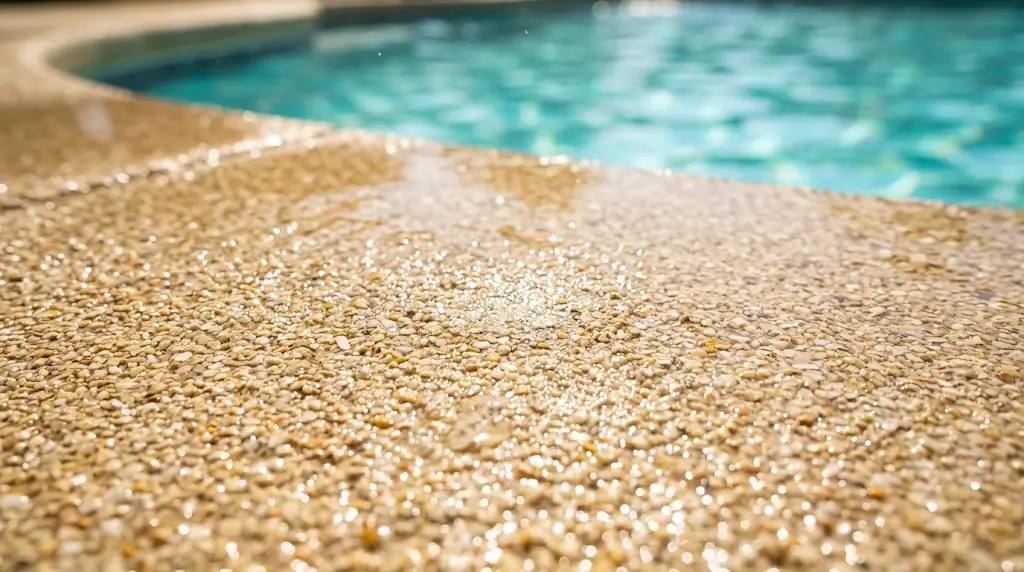
Standard, unmodified epoxy is dangerously slippery when wet and must never be applied directly around a pool. However, professionally installed pool deck coatings in the Phoenix West Valley incorporate micronized polymer or aluminum oxide slip-resistant additives, ensuring the wet surface meets or exceeds the OSHA-recommended Static Coefficient of Friction (SCOF) of 0.5.
Applying a standard, smooth epoxy coating to a pool deck creates an immediate fall hazard. When pool water splashes onto a non-porous resin surface, it creates a hydroplaning effect. A bare foot walking across wet, smooth epoxy possesses almost zero traction. Professional concrete coating contractors solve this physics problem by permanently embedding heavy-duty traction aggregates into the clear topcoat during the curing process.
OSHA Guidelines and the SCOF Metric
Slip resistance is a measurable scientific metric. The Occupational Safety and Health Administration (OSHA) sets baseline safety standards for commercial and residential walking surfaces. OSHA recommends a static coefficient of friction of at least 0.5 for walking and working surfaces, under both wet and dry conditions.
Achieving a 0.5 SCOF on a wet pool deck requires aggressive texturing. Professional installers utilize specialized slip meters to test the friction rating of a cured floor. By manipulating the size, volume, and type of aggregate broadcast into the final polyaspartic clear coat, installers engineer the exact level of traction required for safe bare-foot traffic around residential pools in El Mirage and Glendale.
Anti-Slip Additives for Pool Decks
Contractors use three primary materials to create texture and meet the 0.5 SCOF standard on pool decks. The choice of aggregate dictates both the slip resistance and the physical feeling of the deck under bare feet.
- Micronized Polymers: These synthetic additives feature spherical-shaped particles that provide easier cleanability and are smooth to the touch. Because of its low density, this polymer stays well suspended in thin materials like clear topcoats without sinking to the bottom of the resin layer. It provides excellent traction without cutting into bare feet.
- Aluminum Oxide: This is a highly aggressive, jagged aggregate. It provides maximum slip resistance and is often used on steep commercial ramps or industrial wash bays. It is highly effective but can feel abrasive on sensitive bare feet around a residential pool.
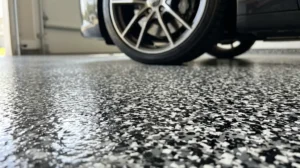
- Quartz Broadcast: A double-broadcast quartz system uses colored ceramic-coated quartz sand as the entire structural body of the floor. The physical build of the quartz inherently provides a rough, sandpaper-like finish that offers extreme wet traction and massive structural durability.
| Additive Type | Slip Resistance (Wet) | Barefoot Comfort | Best Application |
| Micronized Polymer | High (Meets 0.5 SCOF) | Excellent (Smooth/Spherical) | Residential Pool Decks, Patios |
| Aluminum Oxide | Extreme | Poor (Abrasive/Sharp) | Ramps, Commercial Kitchens |
| Color Quartz | Very High | Moderate (Granular) | High-Traffic Pool Decks, Walkways |
Defending Against West Valley Heat and Pool Chemistry
Traction is only one component of a successful pool deck coating. The Phoenix West Valley presents extreme environmental challenges that destroy standard epoxy resins. A pool deck coating in Peoria or Surprise must withstand direct UV radiation, 115°F summer heat, and highly corrosive pool chemicals.
Standard epoxies possess poor UV resistance. When exposed to the direct Arizona sun, a basic epoxy clear coat will undergo a chemical breakdown, turning a yellow or amber color within a matter of months. Furthermore, standard epoxy becomes chalky and brittle under intense UV load.
To combat this, professionals utilize polyaspartic urethanes for the topcoat. Polyaspartic coatings are 100% UV stable and will never yellow. They also feature extreme chemical resistance. When highly acidic muriatic acid or concentrated liquid chlorine is spilled directly onto a polyaspartic pool deck, the coating will not blister, etch, or delaminate.
Maintaining a Textured Pool Deck in the Desert
The textured surface required for slip resistance naturally catches more dirt than a smooth indoor garage floor. During the Arizona monsoon season, dust storms deposit fine silts across Sun City and Sun City West pool decks.
If dirt and sand are left sitting on a textured polyaspartic deck, foot traffic grinds the dirt against the coating, acting as sandpaper and prematurely wearing down the clear coat. Proper maintenance requires specific, routine steps:
- Weekly Rinsing: Use a standard garden hose with a high-pressure nozzle to blast trapped dust out of the anti-slip aggregate.
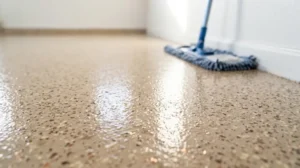
- Monthly Scrubbing: Mix 5 ounces of simple ammonia or a pH-neutral cleaner with a gallon of hot water. Use a stiff-bristled deck brush to agitate the textured surface and lift embedded oils or sunscreen residues.
- Avoid Degreasers: Never use heavy citrus degreasers or soap-based cleaners. Soap leaves a microscopic film on the coating that becomes incredibly slippery when wet, entirely defeating the purpose of the anti-slip additive.
Never compromise your family’s safety by installing a slippery, untreated epoxy near a swimming pool. Ensure your outdoor living space is protected with a UV-stable, chemically resistant system engineered for barefoot traction. Contact Surprise Epoxy Flooring to upgrade your pool deck. Visit our contact page to request a specialized traction assessment and concrete evaluation.