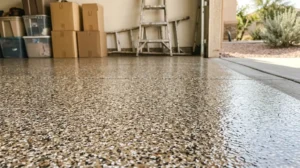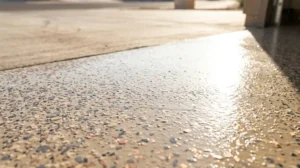
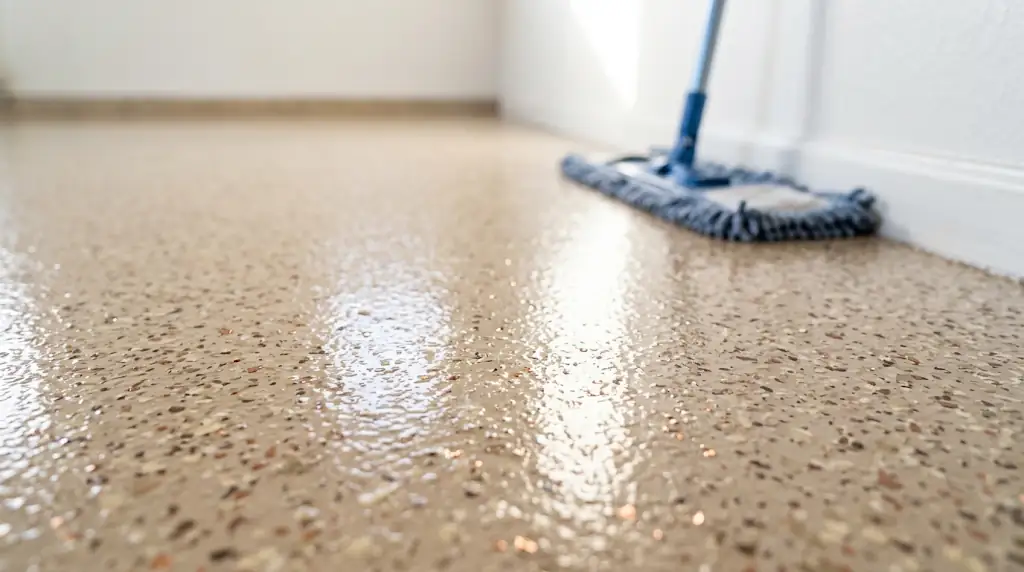
To clean and maintain epoxy flooring in the dusty Phoenix West Valley, sweep weekly using a 24-inch microfiber dust mop to remove abrasive desert silts. For deep cleaning, mop monthly using five ounces of clear ammonia mixed with one gallon of hot water to lift tracked-in oils without leaving a slippery residue.
Epoxy and polyaspartic floors are highly durable and chemically resistant, but they are not entirely maintenance-free. The unique environmental conditions in Maricopa County dictate a specific cleaning regimen. Failing to properly remove local particulate matter acts like sandpaper on your topcoat, permanently dulling the high-gloss finish over time.
The Impact of Arizona Monsoons and Haboobs
The Phoenix West Valley is subjected to intense seasonal weather patterns. During the summer monsoon season, massive dust storms, locally known as haboobs, push thousands of tons of microscopic sand and silt into residential neighborhoods in Surprise and Peoria. This dust contains high levels of silica, which is incredibly hard and abrasive.
When this fine desert dirt blows under garage doors or settles onto coated patios, normal foot traffic and heavy vehicle tires grind those jagged microscopic particles directly into the clear coat. Over several years, this friction creates micro-scratches that diffuse light, making a once-glossy floor look matte, hazy, and old.
Preventing this dulling effect requires a strict dry-cleaning routine:
- Microfiber Dust Mops: A wide microfiber pad traps the fine dust through static electricity rather than just pushing it around.
- Soft-Bristle Brooms: If sweeping, use a broom explicitly rated for indoor or smooth surfaces. Stiff-bristled outdoor push brooms can scratch the resin.
- Leaf Blowers: For standard two-car garages in Sun City or El Mirage, a battery-operated leaf blower is the fastest and most effective way to eject standing dust without applying any physical friction to the floor.
Wet Cleaning: Chemistry Matters
When dry sweeping is no longer sufficient to remove dried mud, spilled beverages, or vehicle fluids, wet mopping is required. However, the chemical makeup of your cleaning solution dictates the safety and longevity of your floor.
Never use standard household floor cleaners, dish soaps, or oil-based detergents on a sealed garage floor. Soap leaves a microscopic film on the non-porous resin. This film acts as a magnet for new desert dust, trapping dirt to the floor immediately after it dries. Worse, when this soapy film gets wet from air conditioning condensation or a rainstorm, it transforms the floor into an extreme slip hazard.
Clear ammonia is the industry standard for cleaning industrial floor coatings. It lifts grease and tire plasticizers effectively but evaporates entirely, leaving zero residue behind.
| Cleaning Agent | Status | Reason |
| Clear Ammonia (5 oz / gal) | Approved | Cuts grease, evaporates clean, leaves zero film. |
| Simple Green (Diluted) | Approved (Spot Clean) | Good for heavy oil spots, but must be thoroughly rinsed with clean water. |
| Dish Soap / Pine-Sol | Prohibited | Leaves a slippery, sticky film that attracts desert dust. |
| Citrus Cleaners / Vinegar | Prohibited | High acidity degrades the structural integrity of the clear topcoat over time. |
For deep wet cleaning, professionals recommend using a hard foam squeegee rather than a traditional string mop. String mops simply push dirty water back into the low spots of the concrete. A foam squeegee allows you to flood the floor with the hot ammonia mixture, agitate stubborn spots, and physically pull the dirty water out of the garage and down the driveway apron.
Removing Tire Marks and Automotive Fluids
Even premium polyaspartic topcoats can develop surface stains if caustic automotive fluids sit unaddressed in the Arizona heat. Heat acts as a chemical catalyst. If a vehicle leaks brake fluid or engine oil onto a hot garage floor in August, the high temperature accelerates the chemical absorption process.
- Engine Oil and Coolant: Wipe up immediately with a blue shop towel. Spray the area with a standard heavy-duty degreaser, let it sit for three minutes, and wipe clean with a wet rag.
- Battery Acid: Golf carts are highly popular in Sun City and Sun City West. If battery acid boils over, it must be neutralized immediately. Flush the area with water and apply a paste of baking soda and water to neutralize the acid before wiping it away. Prolonged exposure to battery acid will burn through any standard epoxy clear coat.
- Hot-Tire Marks: Sometimes tires leave brown or black shadows on the floor. This is not the epoxy peeling; it is rubber transfer from the tire itself. Use a soft nylon bristle brush and a concentrated degreaser to scrub the rubber directly off the topcoat.
According to the Environmental Protection Agency, managing automotive fluid spills responsibly inside the garage also prevents those hazardous materials from washing down residential driveways and entering the local municipal storm drain system.
Keeping your garage or patio floor looking pristine requires nothing more than hot water, cheap ammonia, and regular sweeping to defeat the relentless desert dust. If you are dealing with a bare concrete floor that constantly generates its own dust and ruins your garage, it is time for a professional coating. Contact Surprise Epoxy Flooring for a technical evaluation of your concrete. Visit our contact page to schedule a site visit and start building a cleaner, dust-free garage environment today.